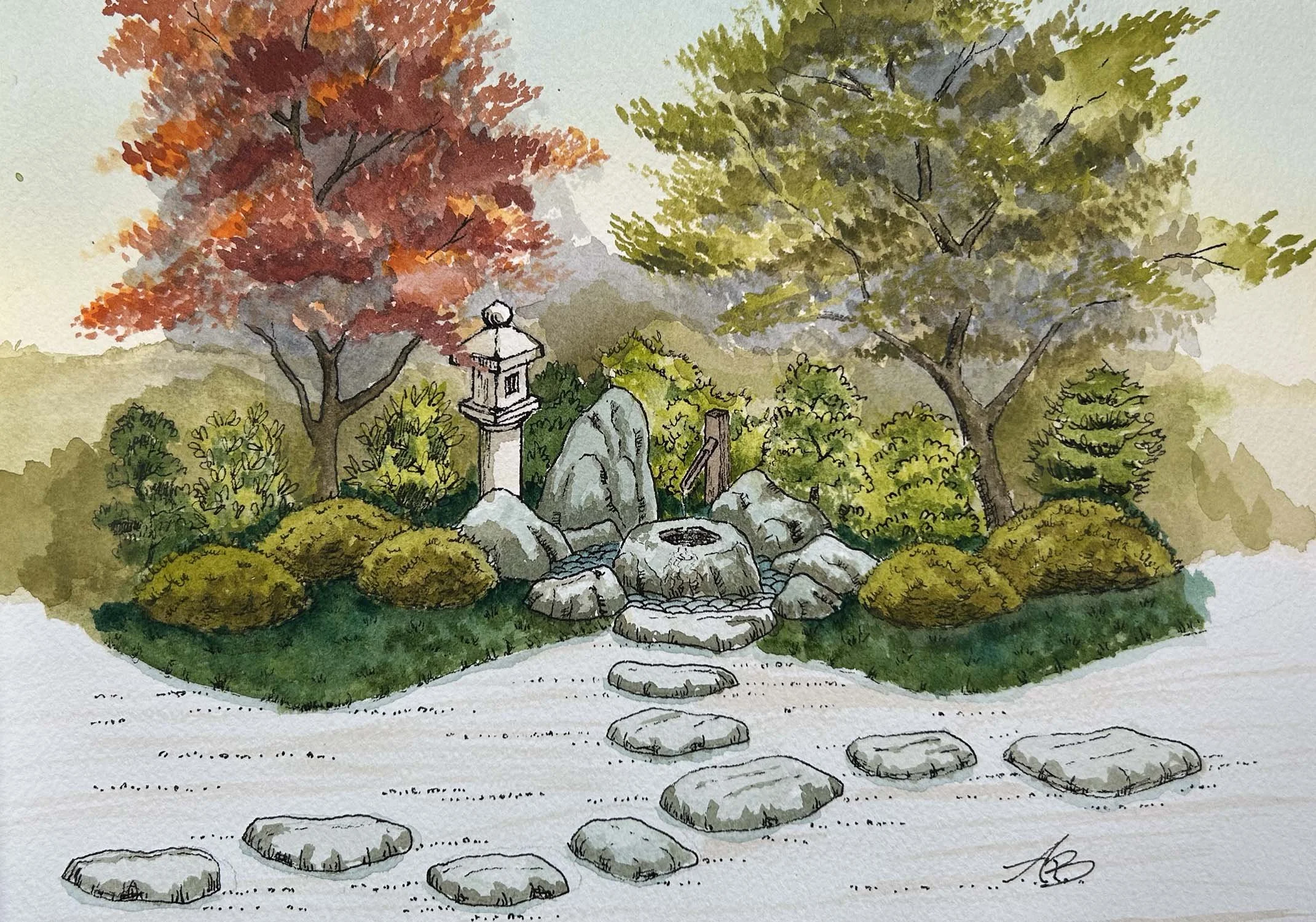
Elements of a Japanese Garden
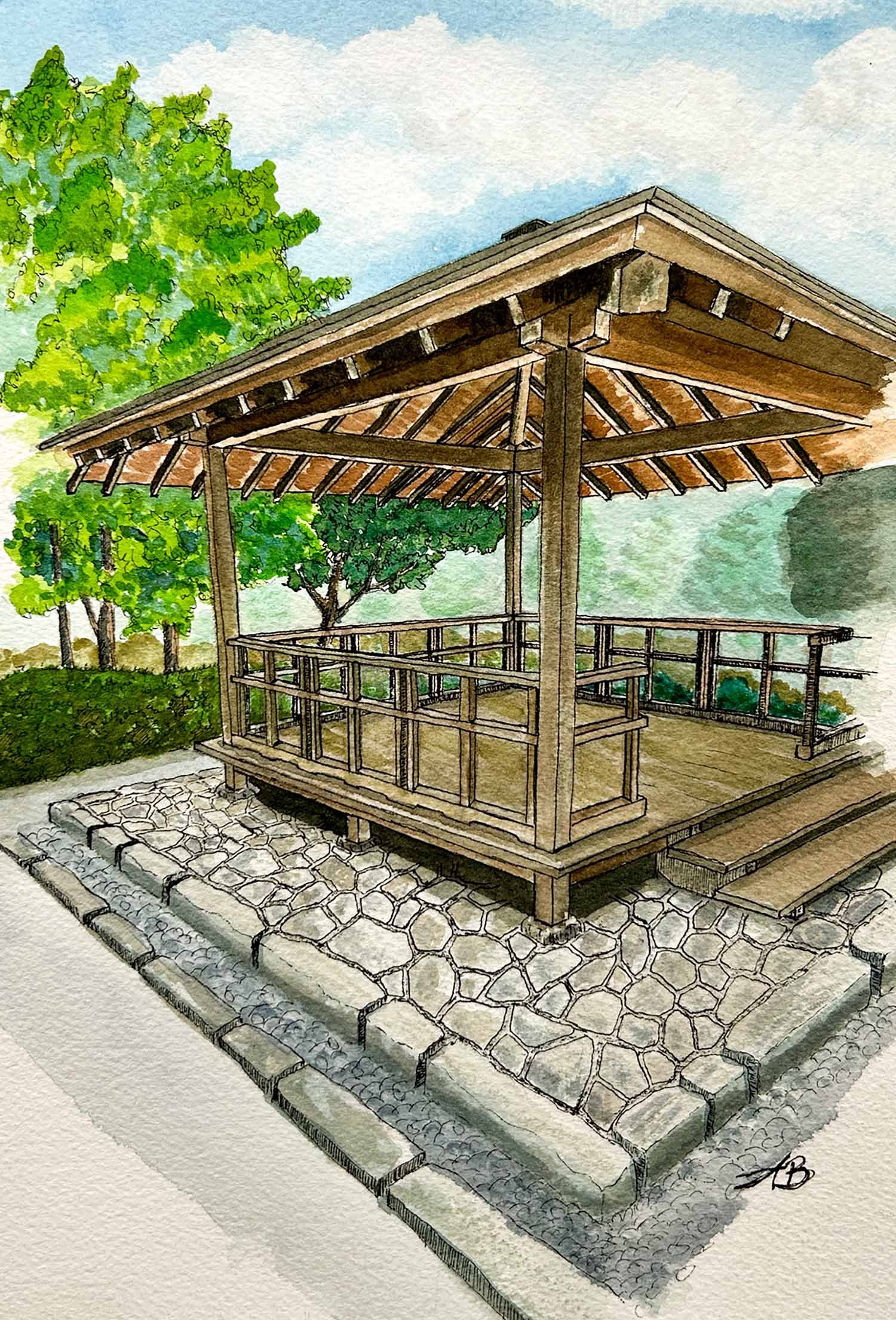
Garden
Structures
Structures like tea houses, wooden gates and viewing pavilions are often seen in authentic Japanese gardens.
Wooden gates serve as the delineation between the outside world and garden. They come in a variety of sizes and styles. It is helpful to think of different types of gates as being on a spectrum from formal to informal, and choose the design and materials accordingly.
Wooden garden pavilions are a destination, place of viewing and also part of the scenery all at the same time, and therefore add tremendous value.
Tea houses are the destination and heart of a Japanese tea garden, and are used in the tea ceremony. Tea culture is so unique and refined, it is no wonder that the creation of a tea house and the surrounding gardens require special knowledge and experience.
Enclosures
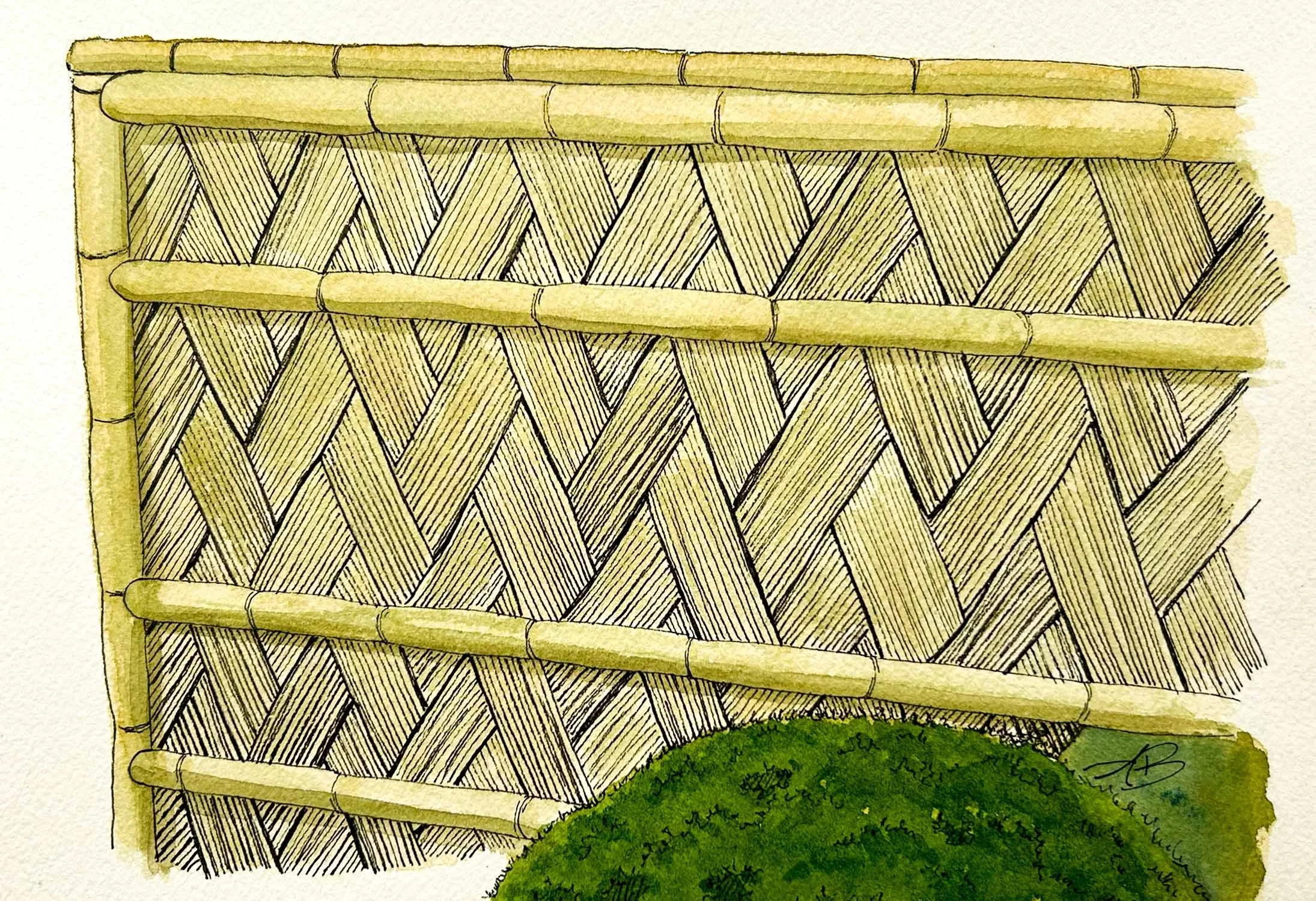
Enclosures are important for privacy but also allow us to create a sense of scale and set up the landscape composition to for a better viewing experience.
Common enclosures are Japanese earthen walls with tile roofs, wooden and bamboo fences, hedges and even mass screen plantings.
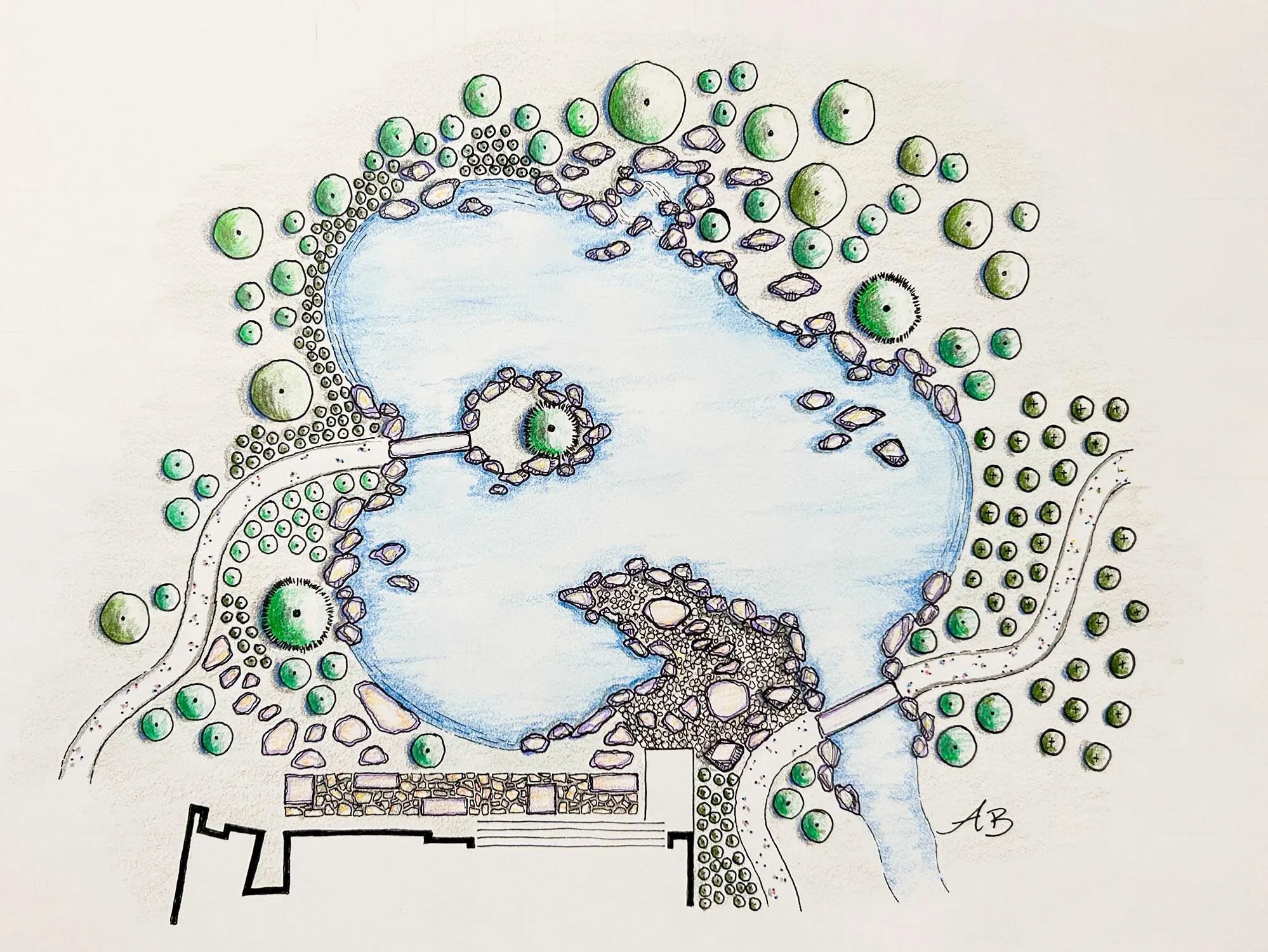
Ponds
Ponds are one of the most stunning Japanese garden features, affording views that evoke scenes from nature of windswept pines on undulating shore lines, mountain waterfalls and rocky islands.
Ponds may be large and include viewing pavilions, walking paths and crossings like bridges and stepping stones. In contrast, ponds could also be smaller and more intimate and viewed up close from the home.
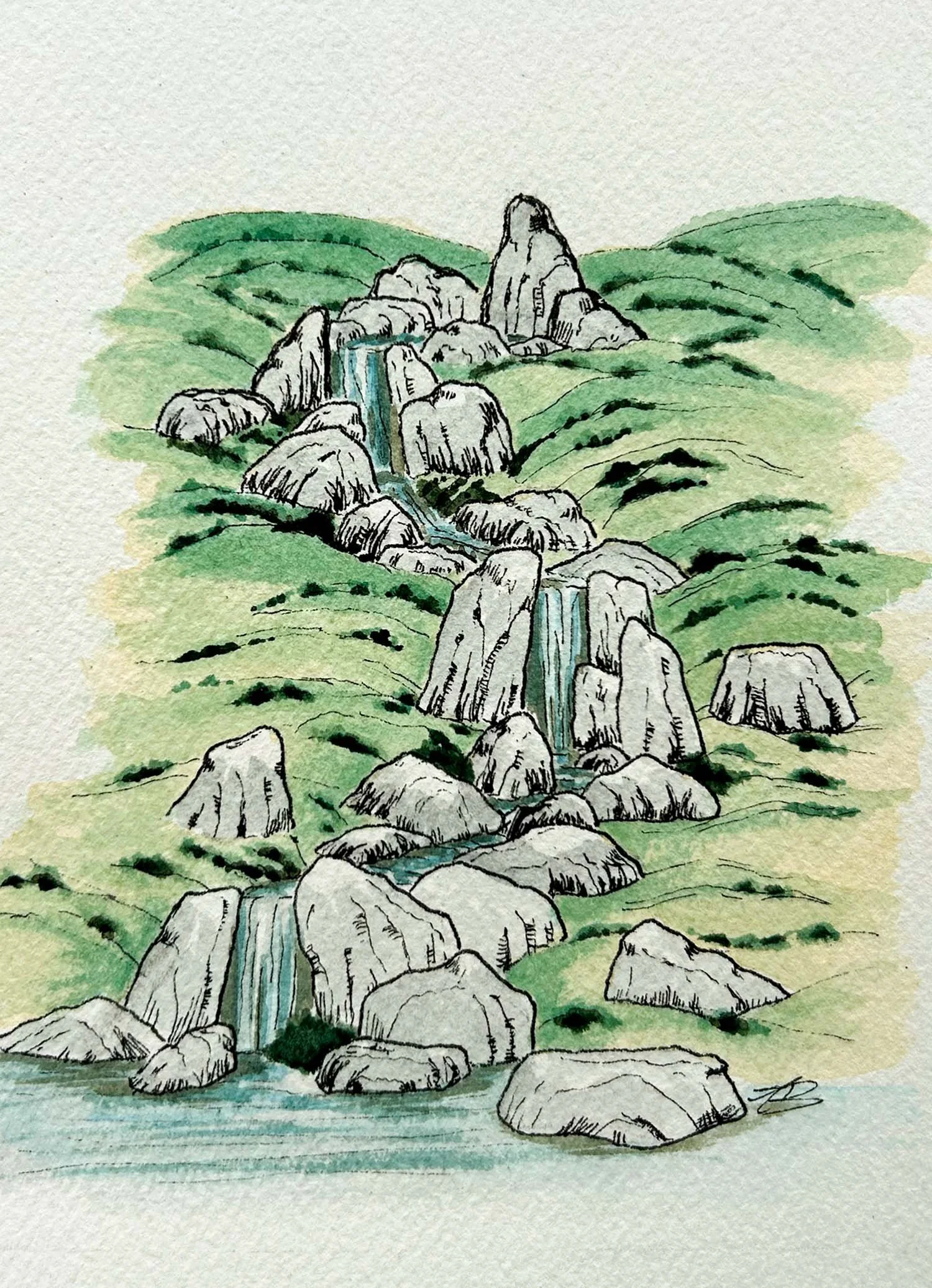
Waterfalls
We often utilize some form of waterfalls as a feature, whether they are part of a pond, stream, or the focal point of a dry landscape, called karesansui in Japanese.
Waterfalls can be tall and majestic, multi-tiered and complex, or murmuring and peaceful. They can appear natural-looking, or be an abstract arrangement of stones of various shapes and sizes that serve as the focal point in a dry-landscape garden.
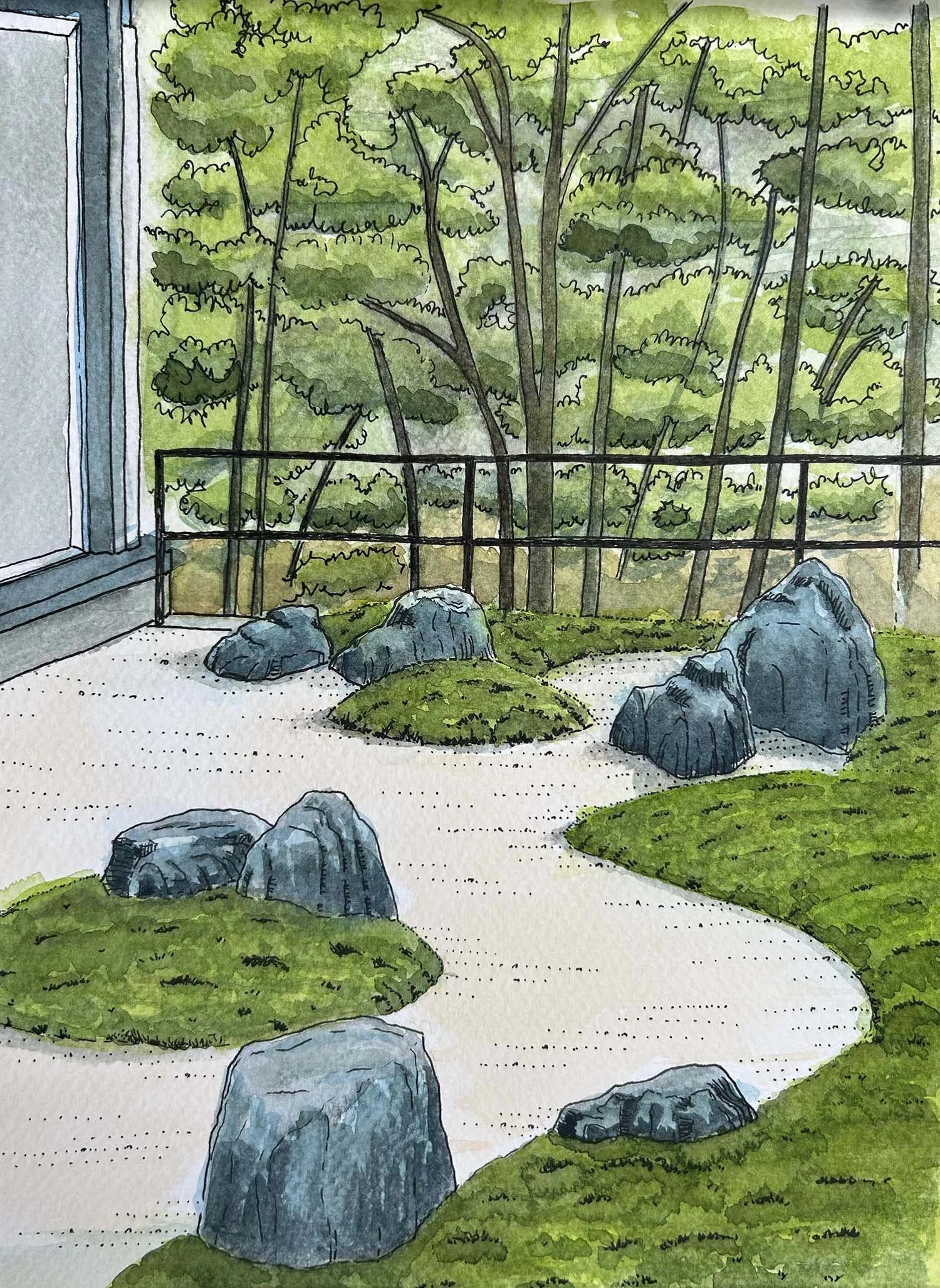
Stone Arrangements
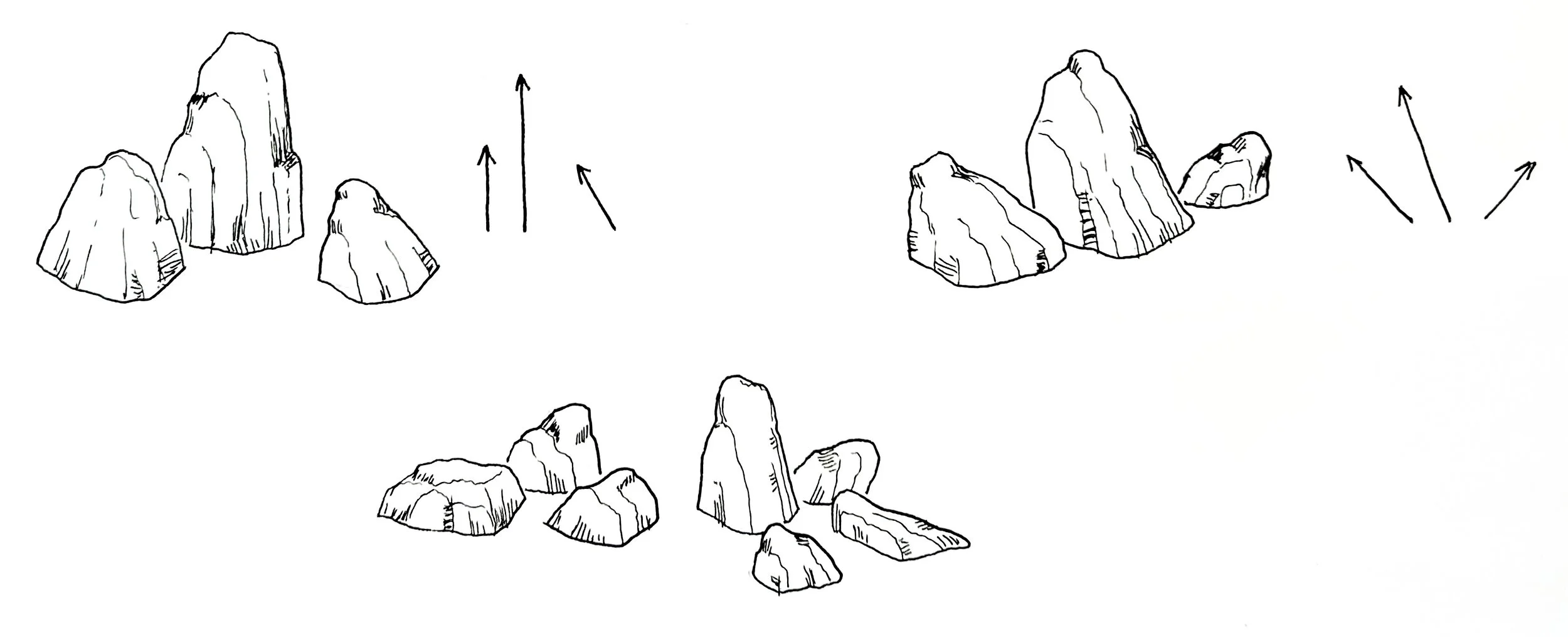
Even a simple grouping of rocks can convey movement and balance at the same time.
We use the beauty of stones to their fullest in our work. Rock arrangements can be made up of many stones that create an asymmetrically balanced and dynamic composition, or be used simply as accents in the garden.
Their power and impact are undoubtedly one of the most valuable elements when it comes to investing in quality materials
Paths & Walkways
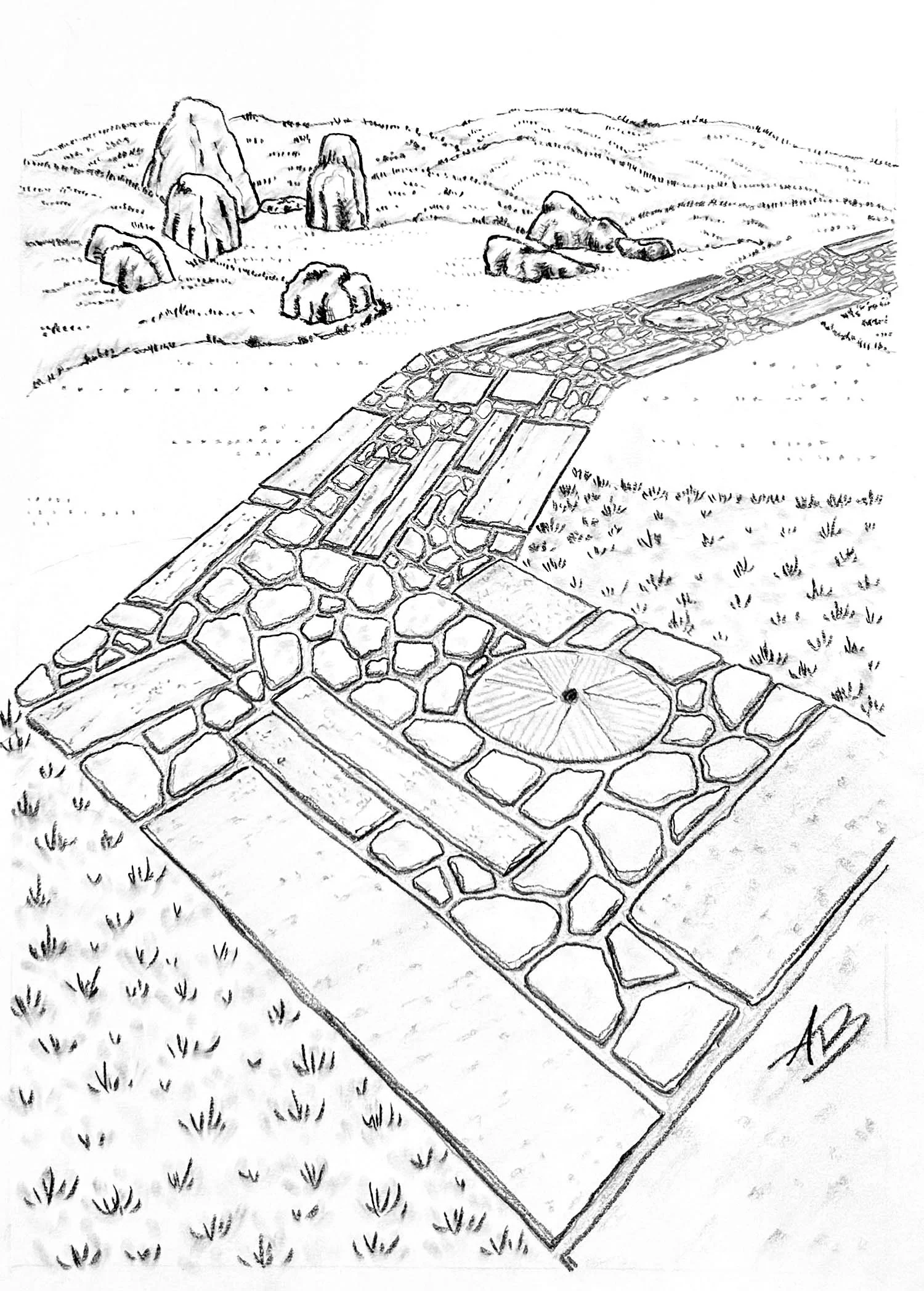
Paths are foundational in allowing us to get from point A to point B, but the Japanese garden tradition teaches us to do it in style. The key is first deciding what percentage will be functional and what percentage will be aesthetic when choosing the type of path to employ at any given location.
For example, a wide walkway would be more suitable in leading to the front door of a house from the driveway than would a loose stepping stone path, which would be better meandering through the garden.
First, the materials and design of the walkway should be chosen based on the functional need and location. Next comes deciding on the type of stone to use and the style, pattern and detail. For example, that same walkway could be formal, semi-formal or informal based on the type of material and pattern alone. The sketch shown here is of a semi-formal path due to its mix of field stone, granite pavers and millstones.
Stone Walls
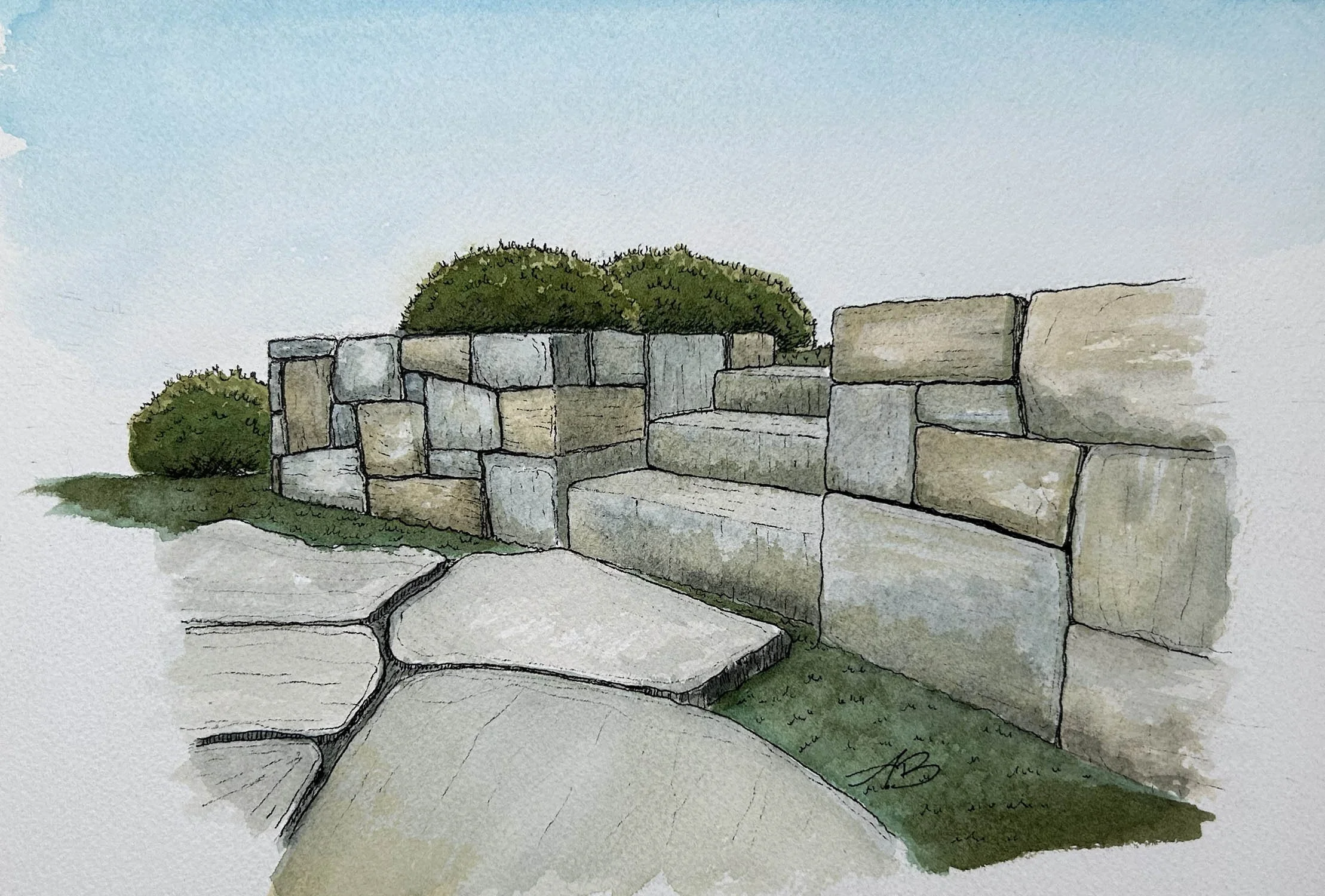
Stones walls in Japan, called ishizumi or ishigaki, are an important part of the bones of the landscape. They can serve as high or low retaining walls, with or without a fence or hedge on top for screening. Walls can also divide up spaces. They are an impactful visual feature no matter the use.
Japanese stone wall techniques developed with the creation of castles in Japan centuries ago, but their beauty and relevance remains to this day.
Whether used as retaining walls or as a way to partition the larger garden into smaller sections, Japanese stone walls are truly timeless elements in our work.
Specimen Trees
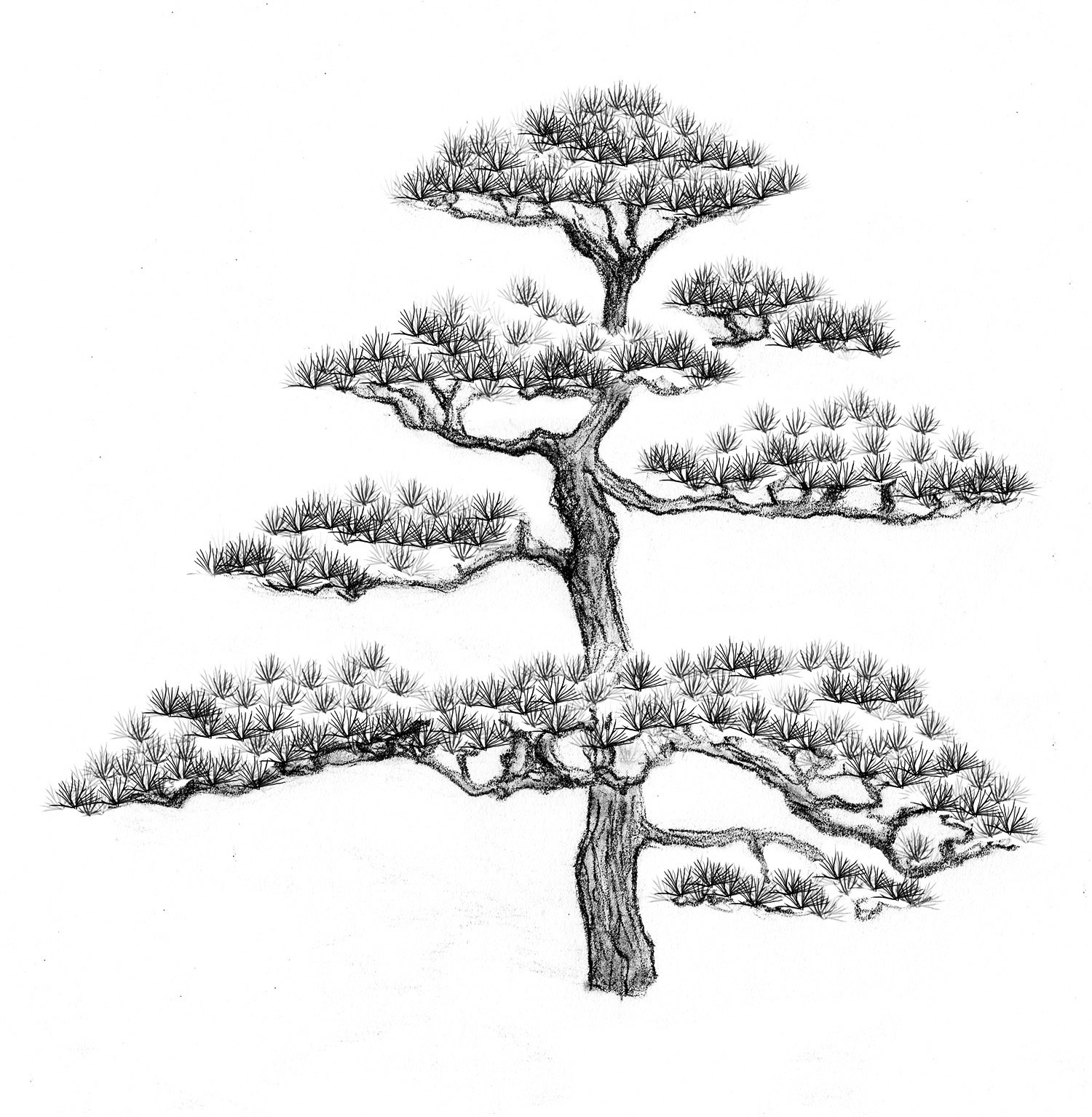
A specimen tree can elevate the landscape in a significant way, highlighting the stone arrangements and providing movement and balance of their own, not to mention adding more layers of the composition
Well-manicured pine trees are what first come to mind when talking about specimen trees in Japanese gardens, but other types of conifers and ornamental trees can also fill the roll. For example, Japanese maples, junipers, hinoki and plum pine (Podocarpus macrophyllus), are just a several of many trees that could also serve as the specimens in the garden.
Water Basins
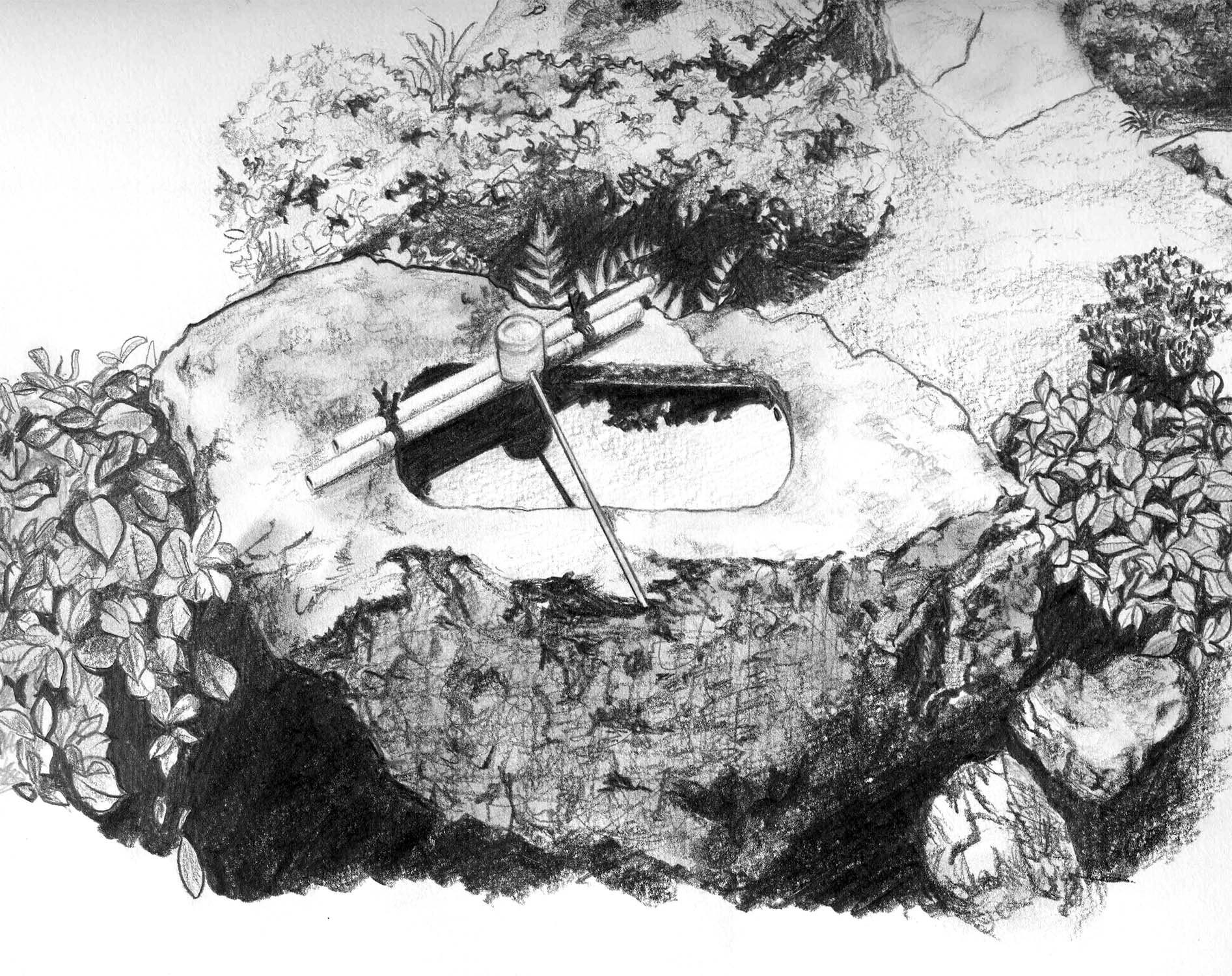
A versatile feature that is known to be used in Japanese tea gardens, water basins can also be a primary or secondary focal point in other types of landscapes that we create.
For example, water basin arrangements, called tsukubai in Japanese, are excellent welcoming features in entrance gardens leading from the gate to the front door.
The water basin rock itself, chōzubachi, is either a carved stone basin or a natural boulder with a hole carved into it.
Stone Ornaments
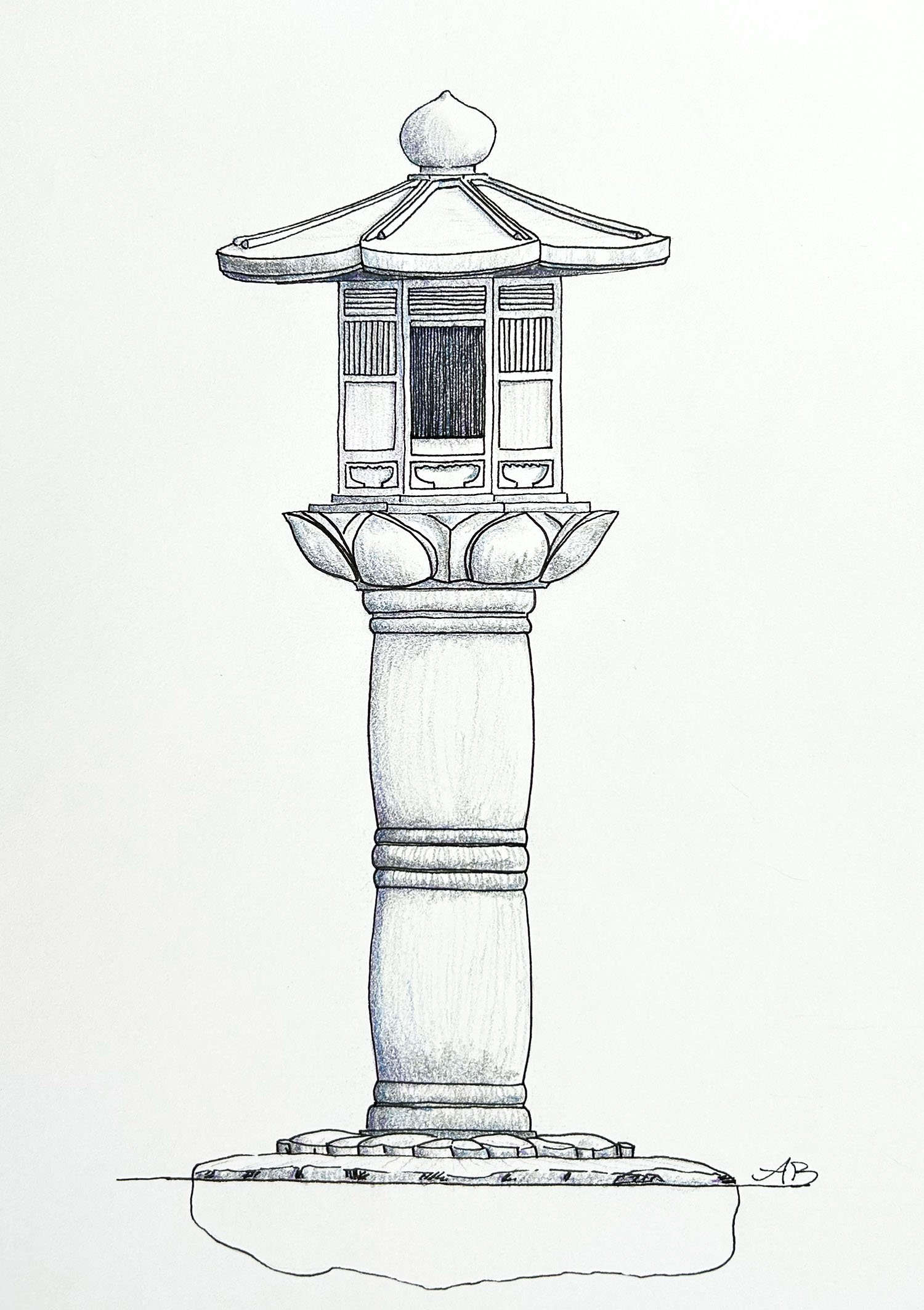
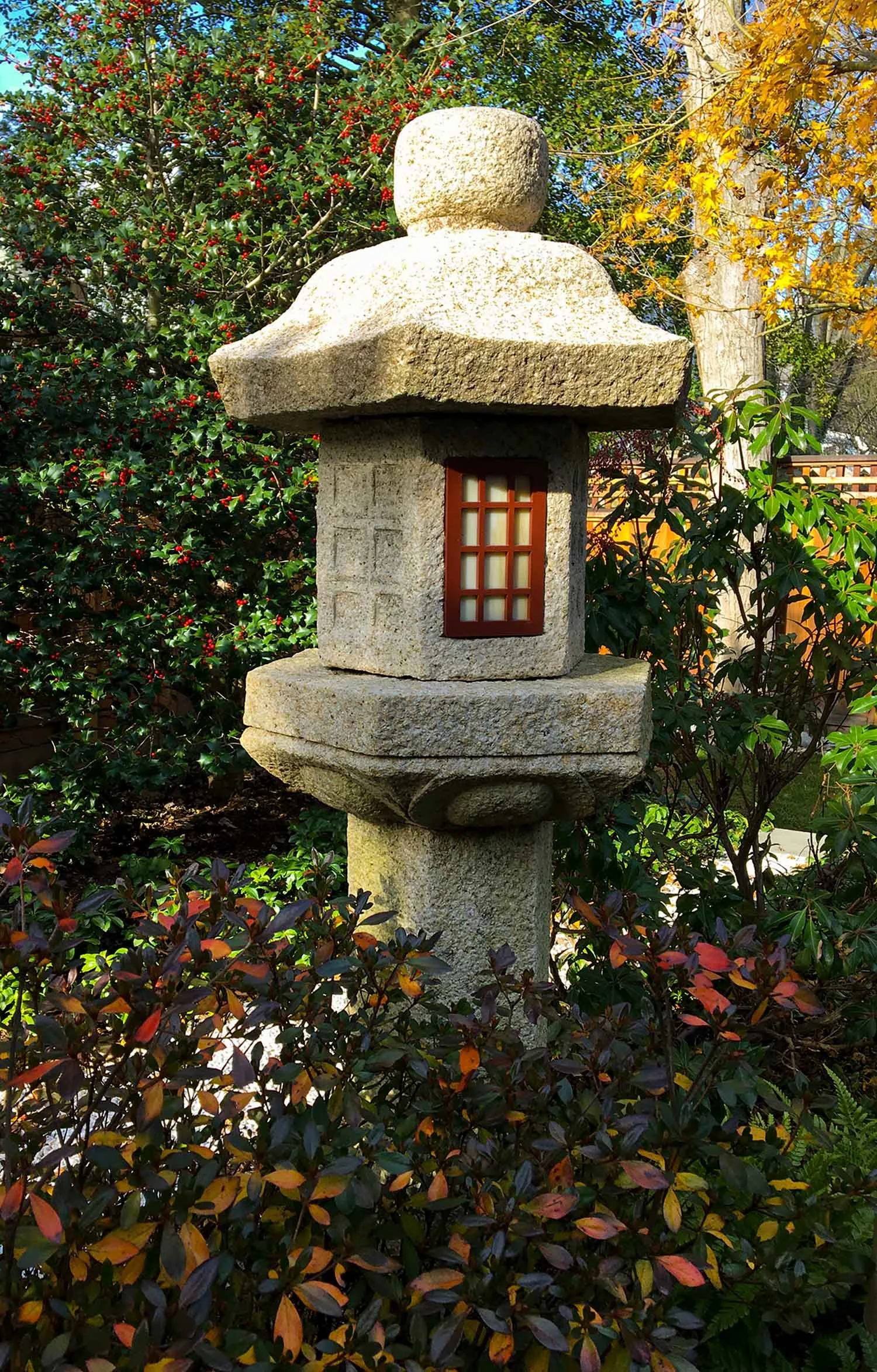
Ishidōrō, or stone lantern in Japanese, as well as pagodas, are the most common type of stone ornaments.
While there is a large variety of shapes, sizes and designs that have come down over the centuries in Japan, each fits into certain categories and has acceptable uses and ways to locate them within the garden.
Stone lanterns, while they might not literally light the way along a path or illuminate a Japanese water basin, the informed placement of each is crucial.
Like all of our materials, we prefer to use high quality pieces, and in the case of stone ornaments, ones from Japan.
Who We Are
We are both guided and inspired by the centuries-old traditions of Japanese craftsmen. The gardens of Japan are some of the most beautiful in the world, creating a curated version of nature that can be appreciated on a fundamental level. We enjoy the challenge of bringing this aesthetic to the many different types of homes we are invited to help transform.